A black tide from Magenta to Milan, tests underway to identify the responsible party. Severe damage to fish fauna.
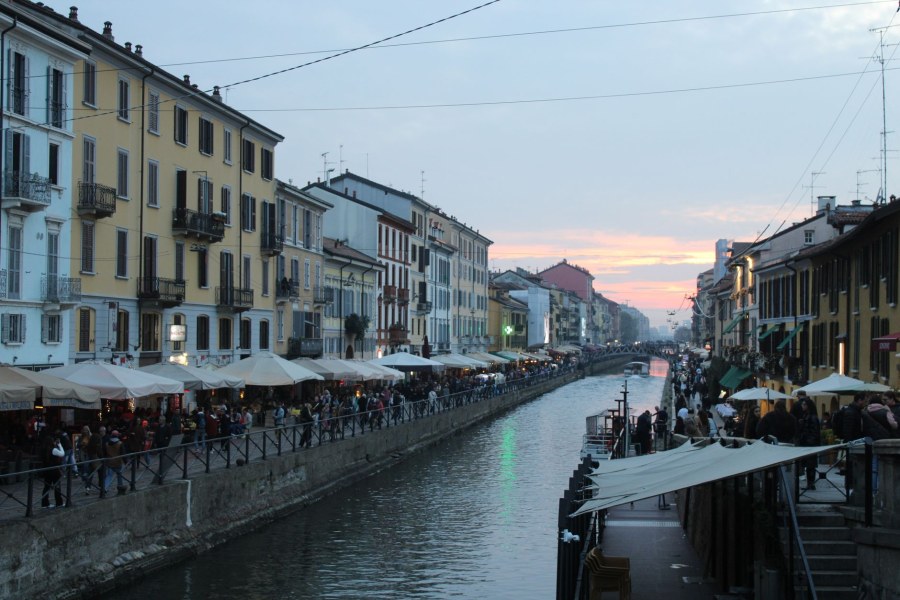
A serious environmental emergency is affecting the Naviglio Grande, with an oily and foul-smelling slick extending for 28 kilometers, from the Ponte Vecchio district of Magenta to the Darsena in Milan. The spilled diesel has already caused harm to wildlife, as evidenced by a swan rescued in Abbiategrasso with its feathers darkened and weighed down by the fuel.
Containment operations were launched immediately, using absorbent booms, closing irrigation ditches to prevent contamination of agricultural land, and halting navigation. Technicians from ARPA have collected water samples to analyze the hydrocarbon composition, while firefighters and Civil Protection personnel are working tirelessly to clean up the waterway.
The Deputy Mayor of Magenta, Simone Gelli, has appealed for the responsible party to come forward, describing the act as intentional and unlawful. Investigations are focusing on the lead of deliberate dumping, after checks on the pipeline to Malpensa revealed no leaks.
The environmental emergency in the Lombardy Navigli system originated from an incident that occurred on Friday, September 4, 2026, in the Ponte Nuovo district of Magenta, east of Milan. In this area, characterized by the presence of a large decommissioned industrial site (the former Saffa, closed in 2002 and subject to reclamation projects), a spill occurred during work on the sewer network, an intervention triggered precisely to restore a blockage in the network itself. It is unclear how a large quantity of oily substance ended up in the sewers.
The affected water system includes the Naviglio Grande, the Naviglio Pavese, and the Naviglio di Bereguardo, waterways managed by the Est Ticino Villoresi Consortium, which, along with the Municipality of Milan, the Metropolitan City, Civil Protection, the Fire Department, and the Regional Environmental Protection Agency (Arpa), is among the key players in the complex containment operation. The area is of significant environmental value, crossing the Lombardy Ticino Valley Park and the South Milan Agricultural Park, with rice paddies and naturalistic areas. The situation was complicated by a fire that broke out in the former industrial area of Ponte Nuovo on the night between Wednesday and Thursday preceding the spill.
The initial containment operations, with floating barriers placed near Abbiategrasso, Trezzano sul Naviglio, and Corsico, failed to completely halt the substance's advance toward Milan. The slick, pushed by the current, then reached the Darsena, the confluence point of the navigli in the city. To protect agriculture, the intakes of the irrigation channels supplying the rice fields were immediately closed. The environmental damage, already reported in the first hours, primarily concerns biodiversity, with fish and aquatic birds affected by the contamination.
"Dentro la Notizia" (Inside the Story) is an amateur, non-profit section of quoz.it, created for people who find it hard to make sense of current affairs without some context. Articles are written with AI assistance from public sources, without a professional newsroom or systematic editorial review: they may contain inaccuracies and are not a substitute for registered news outlets. This is not a registered press outlet under Italian law (L. 62/2001). Images, when not original, come from external sources for illustrative purposes only. If you find an article offensive, inaccurate, or think it should not be published — or you hold rights to a text or image and want it removed — let us know and we will act promptly.
Contact:
info@quoz.it

Comments (0)
No comments yet. Write the first one!