Trump weighs military and diplomatic options, Tehran warns: "Ready for a long war." Alert for American citizens in the Middle East.
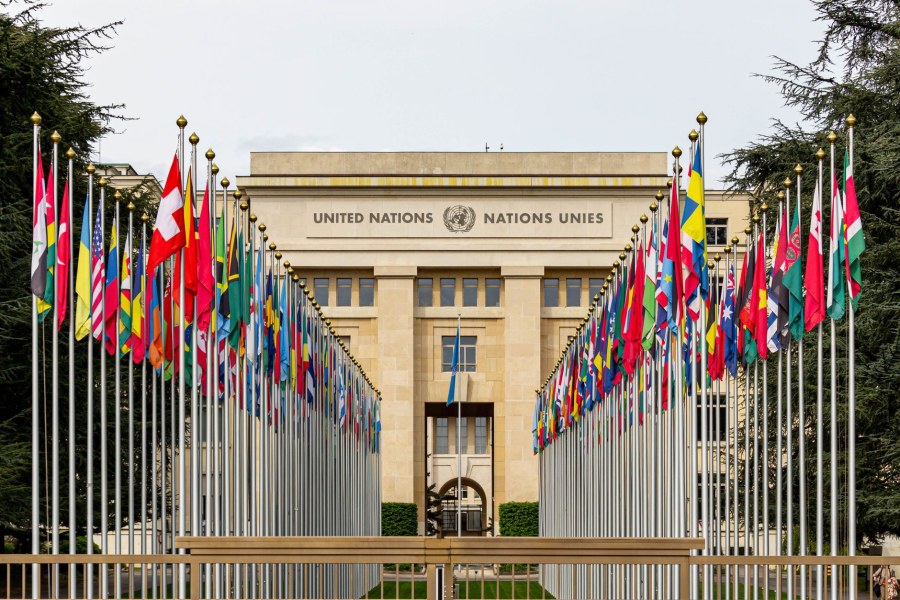
Tensions between the United States and Iran have risen again on the eve of the United Nations General Assembly meeting in New York. U.S. President Donald Trump stated that he is evaluating the next steps, even suggesting the possibility of "blowing up the entire nation" of Iran if necessary. Meanwhile, the Islamic Revolutionary Guard Corps warned that it is prepared for a "long-term war" with strategic weapons not yet deployed.
Simultaneously, the U.S. State Department issued new security advisories for American citizens in the Middle East, urging them to remain highly vigilant and warning of the risk of flight cancellations and airspace closures. The advisories explicitly cite the risk of the conflict rapidly escalating, particularly in light of Houthi attacks in Yemen against targets in Saudi Arabia.
Despite the threats, the diplomatic door remains open: Trump stated that he is willing to meet with Iranian President Masoud Pezeshkian during the UN General Assembly. Iran has conveyed its conditions for ending the war through mediators, including the cessation of hostilities, the return of frozen Iranian assets, and the lifting of the U.S. naval blockade.
The conflict between the United States and Iran has deep roots dating back to the Islamic Revolution of 1979, when the Shah's regime was overthrown and replaced by the Islamic Republic led by Ayatollah Khomeini. Since then, Washington and Tehran have had tense relations, with the U.S. frequently imposing economic sanctions on Iran over its nuclear program and support for militant groups in the region. The situation has further deteriorated in recent years, with mutual attacks and escalating military tensions.
The current crisis now involves two strategic maritime passages, the Strait of Hormuz and the Bab el-Mandeb Strait, with consequences for trade routes and international energy flows. Iran supports the Houthis in Yemen, a rebel group fighting against the internationally recognized government and its allies, including Saudi Arabia. Houthi attacks on Saudi targets have led to a further geographical expansion of the conflict, increasing the risk of regional escalation.
Today, the situation hangs between two scenarios: a new military escalation or an attempt to reopen diplomatic negotiations. The diplomatic week in New York, with the UN General Assembly, thus becomes decisive for the future of relations between the two countries and for the stability of the entire Middle Eastern region, while the crisis continues to weigh on the security of energy and trade routes in the Gulf and the Red Sea.
"Dentro la Notizia" (Inside the Story) is an amateur, non-profit section of quoz.it, created for people who find it hard to make sense of current affairs without some context. Articles are written with AI assistance from public sources, without a professional newsroom or systematic editorial review: they may contain inaccuracies and are not a substitute for registered news outlets. This is not a registered press outlet under Italian law (L. 62/2001). Images, when not original, come from external sources for illustrative purposes only. If you find an article offensive, inaccurate, or think it should not be published — or you hold rights to a text or image and want it removed — let us know and we will act promptly.
Contact:
info@quoz.it

Comments (0)
No comments yet. Write the first one!