A Franco-Moroccan couple reinvents the typical Neapolitan sandwich with ingredients compliant with Islamic law. Lines and waits in Mantes-la-Jolie.
In Mantes-la-Jolie, fifty kilometers from Paris, a small eatery is experiencing unexpected success with a halal version of the panuozzo, the typical sandwich from Gragnano. The shop, run by the couple Céline Bartolomeo—originally from Campania and a convert to Islam—and Sabre Benabdalla, who is Moroccan, attracts customers who even drive an hour and line up to taste the product.
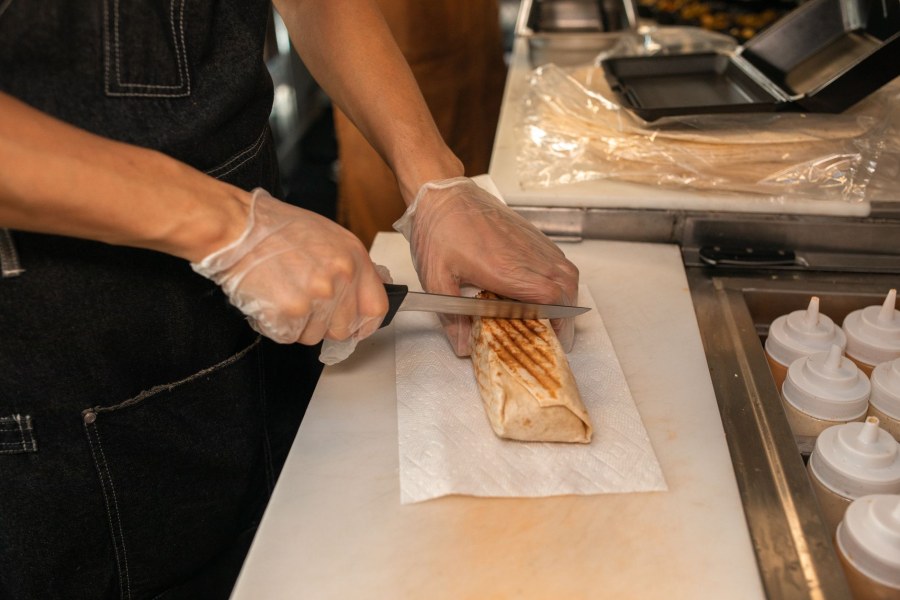
The halal panuozzo is prepared with ingredients that respect Islamic precepts, such as beef bacon and halal bacon, but retains classic Campanian fillings like stracciatella, pesto, Gorgonzola, peppers, and sun-dried tomatoes. Customers often film their first bite of the sandwich, showcasing the curiosity and enthusiasm for this cultural and culinary reinterpretation.
The panuozzo is a typical product of the culinary tradition of Gragnano, in the province of Naples, known for its bread dough and pasta industry. It is a sandwich prepared with a dough similar to pizza, baked in an oven, and filled with predominantly local ingredients, often linked to the peasant and maritime traditions of the Amalfi Coast. Its origin is tied to the need to create a substantial and quick meal for workers.
Its transformation into a halal version stems from the encounter of two cultures. Halal, in Arabic, means "permissible" and refers to everything allowed by Islamic law, particularly regarding food, which must adhere to precise slaughtering rituals and exclude ingredients such as pork and alcohol. The Franco-Moroccan couple applied these principles to a symbol of Campanian cuisine, creating a gastronomic bridge. This phenomenon also reflects the growing attention to the halal market in Europe and the adaptation of local traditions to multicultural communities.
"Dentro la Notizia" (Inside the Story) is an amateur, non-profit section of quoz.it, created for people who find it hard to make sense of current affairs without some context. Articles are written with AI assistance from public sources, without a professional newsroom or systematic editorial review: they may contain inaccuracies and are not a substitute for registered news outlets. This is not a registered press outlet under Italian law (L. 62/2001). Images, when not original, come from external sources for illustrative purposes only. If you find an article offensive, inaccurate, or think it should not be published — or you hold rights to a text or image and want it removed — let us know and we will act promptly.
Contact:
info@quoz.it

Comments (0)
No comments yet. Write the first one!