Found in California's volcanic springs, it breaks the temperature record for complex organisms. It changes shape to protect itself.
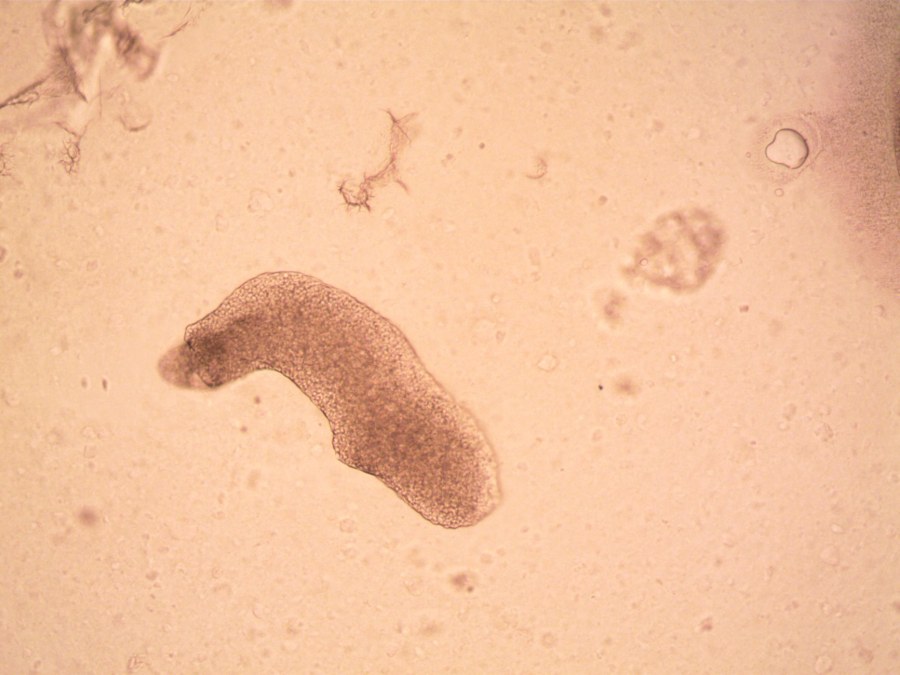
A scientific discovery has identified the first eukaryotic organism capable of living and reproducing at temperatures above 63 degrees Celsius. The amoeba, named Incendiamoeba cascadensis, was found in the geothermal springs of Lassen Volcanic National Park in California.
Brought to the laboratory, the amoeba continued to grow without issues up to 57°C, surpassing the previous record. When researchers raised the temperature to 63°C, the organism began dividing through mitosis, demonstrating not only its ability to withstand extreme heat but to thrive in it. Its genome contains genes associated with the repair of proteins and DNA.
To survive, the fire amoeba changes shape: beyond 63°C, it forms a protective layer around the nucleus, allowing it to withstand up to 70°C. The discovery, described in the journal Cell, revolutionizes our understanding of the thermal limits of complex life.
Until less than a month ago, science believed that 60°C was the maximum limit beyond which complex life (eukaryotic organisms, with cells possessing a nucleus) could not exist. This boundary was based on previous observations and represented a seemingly insurmountable biological barrier for creatures more evolved than simple bacteria.
The search for extremophilic organisms (those living in prohibitive conditions) traditionally focuses on volcanic zones. Between 2023 and 2025, a team from Syracuse University collected samples in the geothermal springs of the California park, where water flows between 47 and 64°C. Among various organisms, the "fire amoeba" stood out for its capabilities.
The survival mechanism might lie in positively charged amino acids on its surface, a characteristic also common in thermophilic bacteria. These molecules would help stabilize proteins that would otherwise break down. The discovery not only shifts the boundaries of known life but also offers clues about how complex organisms can adapt to extreme environments, with implications for astrobiological research and the understanding of evolution.
"Dentro la Notizia" (Inside the Story) is an amateur, non-profit section of quoz.it, created for people who find it hard to make sense of current affairs without some context. Articles are written with AI assistance from public sources, without a professional newsroom or systematic editorial review: they may contain inaccuracies and are not a substitute for registered news outlets. This is not a registered press outlet under Italian law (L. 62/2001). Images, when not original, come from external sources for illustrative purposes only. If you find an article offensive, inaccurate, or think it should not be published — or you hold rights to a text or image and want it removed — let us know and we will act promptly.
Contact:
info@quoz.it

Comments (0)
No comments yet. Write the first one!