A stray cat, rubbing against a woman's belly, led her to discover she was pregnant. The feline behavior reveals an ancient sensitivity.
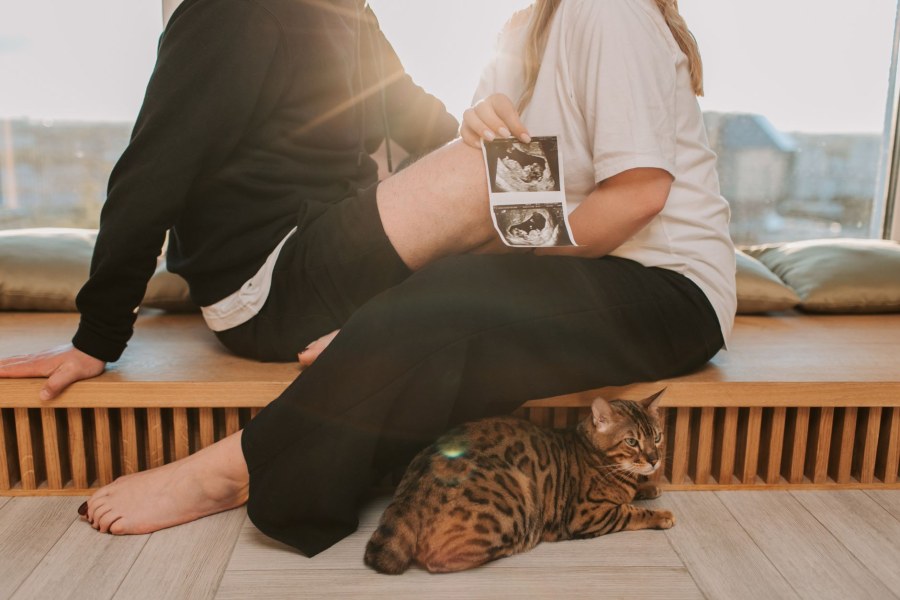
A woman discovered she was pregnant thanks to the unusual behavior of a stray cat. The animal, which had approached her on the street, began repeatedly rubbing itself against her stomach. This gesture, seemingly affectionate but unusual, prompted the woman to take a pregnancy test.
Three days later, the test came back positive, confirming that the cat had sensed something she herself was unaware of. The episode, reported by the press, highlights how felines can have an extraordinary sensitivity in detecting physical changes in humans, in this case related to pregnancy hormones.
The ability of animals, particularly cats, to perceive changes in human health has been known for centuries and is often shrouded in mystery. Cats possess a sense of smell up to 14 times more developed than humans and can detect minute hormonal variations. In the case of pregnancy, a woman's body begins producing human chorionic gonadotropin (hCG), a hormone whose scent might be detectable by a particularly sensitive feline.
These episodes are not uncommon in folklore and anecdotal accounts, but they find a scientific explanation in feline biology. The described behavior, rubbing, is a way to mark territory with pheromones, but it can also be a response to a new and interesting olfactory stimulus. The cat's instinct, therefore, guided a gesture that became a revealing signal for the woman, connecting ancient animal abilities to a modern personal discovery.
"Dentro la Notizia" (Inside the Story) is an amateur, non-profit section of quoz.it, created for people who find it hard to make sense of current affairs without some context. Articles are written with AI assistance from public sources, without a professional newsroom or systematic editorial review: they may contain inaccuracies and are not a substitute for registered news outlets. This is not a registered press outlet under Italian law (L. 62/2001). Images, when not original, come from external sources for illustrative purposes only. If you find an article offensive, inaccurate, or think it should not be published — or you hold rights to a text or image and want it removed — let us know and we will act promptly.
Contact:
info@quoz.it


Comments (0)
No comments yet. Write the first one!