Australian researchers build a robot with a hybrid 'brain' made of silicon and lab-grown human neurons.
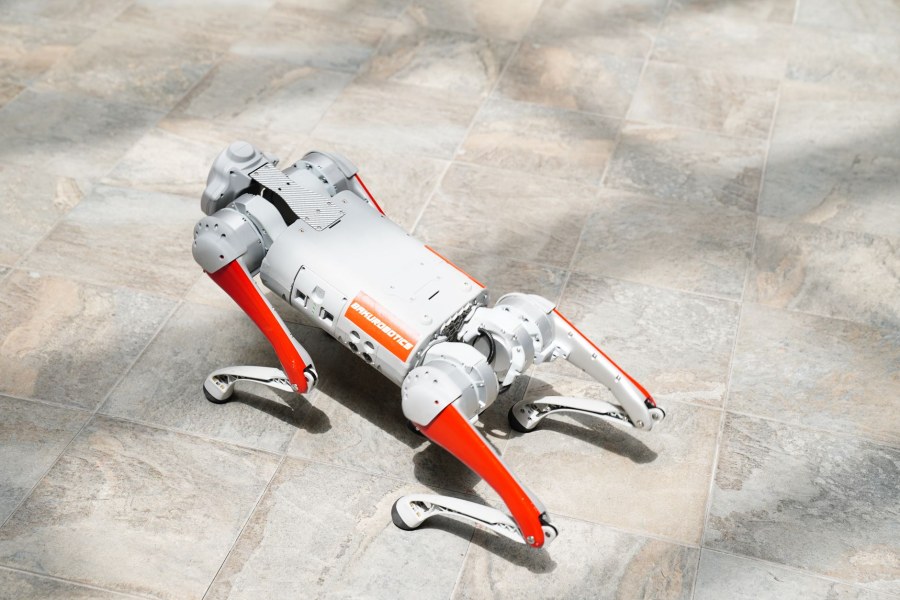
Researchers at the Australian company Cortical Labs, in collaboration with the Honda Research Institute Europe, have created the first robot dog equipped with a hybrid 'brain.' This brain is composed of human neurons cultivated in a laboratory, integrated onto a chip, and connected to the robotic system via tiny electrodes.
The robot, a practical demonstration, was trained in a virtual environment to perform a simple navigation task: searching for a target on a 6x6 grid stimulated by a food 'scent.' After over 4,000 hours of work and 1,000 configurations, the virtual agent learned the task, and the system was successfully transferred to the physical robot.
The long-term goal of the scientists, as explained by CEO Brett Kagan, is to develop autonomous machines capable of adapting to real and unpredictable environments, leveraging the computational efficiency and adaptability of biological neural networks. The details of the study have been published on ArXiv.
The field of biocomputation, which integrates biological systems with electronic hardware, is not new, but this experiment represents a significant step forward toward creating hybrid 'brains' for robots. The underlying idea is that biological neurons, by their nature, can handle complex and unpredictable situations with much lower energy consumption compared to traditional silicon-only computers.
The path to this result begins with the ability to cultivate and keep human neuronal networks alive in the laboratory. Researchers at Cortical Labs have developed a platform that connects these neuronal cultures (in this case, 26 different networks) to a bioelectronic interface. This interface translates the electrical stimuli from the neurons into commands for the robot.
The success of this experiment, albeit on a very simple task, paves the way for future scenarios where service, rescue, or exploration robots could be guided by biological nervous systems, with potential benefits in terms of adaptability. At the same time, it also raises important ethical questions, especially regarding possible military applications, as highlighted by the researchers themselves.
"Dentro la Notizia" (Inside the Story) is an amateur, non-profit section of quoz.it, created for people who find it hard to make sense of current affairs without some context. Articles are written with AI assistance from public sources, without a professional newsroom or systematic editorial review: they may contain inaccuracies and are not a substitute for registered news outlets. This is not a registered press outlet under Italian law (L. 62/2001). Images, when not original, come from external sources for illustrative purposes only. If you find an article offensive, inaccurate, or think it should not be published — or you hold rights to a text or image and want it removed — let us know and we will act promptly.
Contact:
info@quoz.it


Comments (0)
No comments yet. Write the first one!