The Civil Protection bulletin returns to orange. A new Atlantic disturbance brings rain and thunderstorms to Central and Northern Italy.
Today, Sunday, November 22, 2026, bad weather returns to strike Italy with a new wave of instability. The Department of Civil Protection has issued an orange weather alert, the second risk level, which involves a total of eight regions, primarily in Central-Northern Italy.
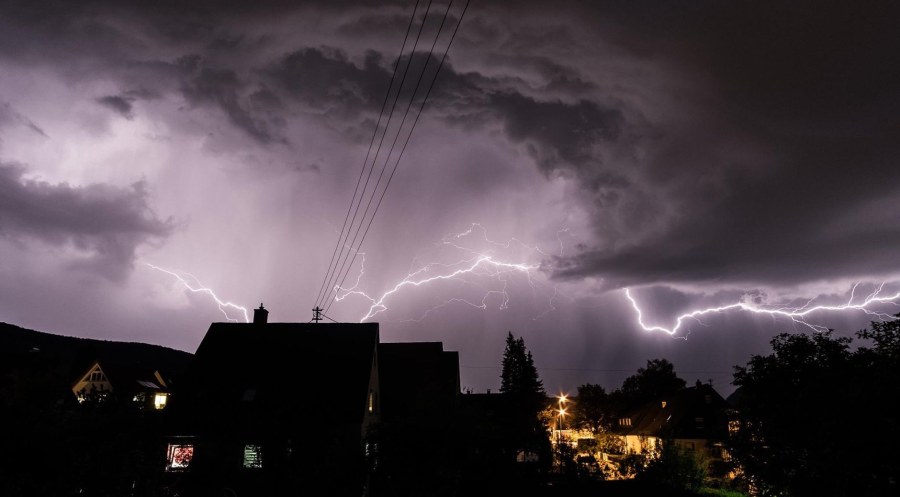
The Atlantic disturbance is causing widespread precipitation and thunderstorms, with the peak rainfall expected between Liguria and Upper Tuscany. Conditions are worsening after the brief mild respite on Saturday, November 21, with the return of intense rains and strong winds.
In addition to the orange alert, a yellow alert has been declared in six other regions. The dynamic meteorological situation will also characterize the coming week, with disturbed passages and colder weather primarily affecting Northern Italy.
Italy has been experiencing days of persistent bad weather, fueled by an intense flow of Atlantic currents over the central-western Mediterranean. This meteorological situation is not an isolated event today, but represents the latest chapter in a wave of instability that began at the start of November 2026.
The origin of the current disturbed phase dates back to the passage of successive Atlantic disturbances, numbered by meteorological services (for example, "disturbance no. 9 of the month" was discussed). These systems have brought, in previous weeks, critical issues such as flooding and river overflows, particularly between Liguria and Tuscany, and have kept the country in a state of almost constant alert, with bulletins alternating yellow and orange codes across various regions.
The undisputed protagonist of this emergency is the Department of Civil Protection, which monitors the situation and issues criticality bulletins. The evolution of the situation has seen a gradual worsening, with the arrival today of a new and more intense Atlantic disturbance that has led to a tightening of alerts. The immediate consequences are hydrogeological risk, with possible flooding, and the danger associated with strong winds and intense precipitation.
"Dentro la Notizia" (Inside the Story) is an amateur, non-profit section of quoz.it, created for people who find it hard to make sense of current affairs without some context. Articles are written with AI assistance from public sources, without a professional newsroom or systematic editorial review: they may contain inaccuracies and are not a substitute for registered news outlets. This is not a registered press outlet under Italian law (L. 62/2001). Images, when not original, come from external sources for illustrative purposes only. If you find an article offensive, inaccurate, or think it should not be published — or you hold rights to a text or image and want it removed — let us know and we will act promptly.
Contact:
info@quoz.it



Comments (0)
No comments yet. Write the first one!