This is the ranking "Best Anime Series of 2026", updated in November 2026 and ordered by the votes of QUOZ visitors. In the lead: Frieren: Beyond Journey's End, Jujutsu Kaisen: The Culling Game Part 1 and Re:Zero kara Hajimeru Isekai Seikatsu.... Every title comes with a description, a review and, where available, a trailer and a link to watch or buy it. Vote for your favorites too.
Frieren: Beyond Journey's End
In its second season, elf mage Frieren continues her journey with Fern and Stark toward the harsh Northern Plateau, passing through villages scarred by demons and old memories. A contemplative fantasy about time, grief and the meaning of connection between an almost eternal life and mortal ones.
Frieren: Beyond Journey's End returns for a second season, once again produced by Madhouse under director Keiichiro Saito, following elf mage Frieren, her young apprentice Fern and the warrior Stark as they cross the Northern Plateau, a hostile region scarred by powerful demons and villages still bearing the marks of past wars and tragedies. Compared to the more adventurous pace of the first season, built around the exam to become a first-class mage, these ten episodes slow things down further, returning to the episodic, contemplative structure that made the series stand apart in the fantasy landscape, built from small encounters, scattered memories and everyday gestures rather than grand reveals. The underlying theme remains Frieren's relationship with time: an essentially immortal mage who, after losing the hero Himmel and her old companions, has learned to value precisely what time erodes, and who over the course of the journey passes that sensibility on to Fern, whose emotional growth unfolds alongside her magical one. There are notable confrontations, including battles against the demons haunting the Plateau, but the series continues to favor psychological tension and character work over action for its own sake. Technically, Madhouse sticks to a style built on static framing, natural light and unhurried editing that recalls arthouse cinema more than the average seasonal television production, choices that reinforce the meditative tone of the writing credited to Kanehito Yamada and Tsukasa Abe. Some observers have noted that this second season, while maintaining the first's quality, occasionally risks feeling unfocused for viewers seeking tighter narrative momentum, though that trade-off reads as a deliberate choice rather than a flaw. The season's January 2026 return nonetheless reignited international attention around the series, with steady viewership on Crunchyroll and critical discussion that has often placed it, alongside titles like Jujutsu Kaisen, among the most significant anime of the winter season, cementing the franchise as one of contemporary Japanese animation's benchmarks.
see full review
Jujutsu Kaisen: The Culling Game Part 1
The third season, adapted from Gege Akutami's manga, picks up after Sukuna's defeat in Shibuya and Gojo's imprisonment, as sorcerers and ordinary citizens across Japan are swept into the ruthless Culling Game orchestrated by Kenjaku, a survival tournament that reshuffles the balance of power.
Jujutsu Kaisen returns for a third season, subtitled The Culling Game Part 1, picking up right at the darkest point of the Shibuya arc: Satoru Gojo trapped in the Prison Realm and Kenjaku, now free to act, launching the Culling Game, a gruesome tournament that forces recognized sorcerers and ordinary people carrying cursed energy to fight each other across Japan on pain of death. Still produced by MAPPA, the season centers mainly on Yuji Itadori and Yuta Okkotsu, whose return to the forefront of the story, following the Jujutsu Kaisen 0 film, reshuffles the dynamics among the surviving protagonists, joined by figures such as sorcerer-turned-lawyer Hiromi Higuruma, called upon to judge Yuji for the killing of a fellow student. Narratively, this is one of the darkest, most violent stretches of Gege Akutami's entire story, marked by the loss of long-running characters and an escalation of power that pushes survivors to face increasingly lethal opponents, in a setting where the moral rules of the sorcerer world are constantly called into question. MAPPA maintains the technical standard that made the series famous, with combat sequences built on ambitious digital animation, particularly in the clash between Yuji and Yuta, among the most elaborate the series has produced, though critics have also flagged some shortcomings, chiefly a script that repeatedly leans on lengthy verbal exposition to convey complex plot developments, and an ensemble cast that, in this first stretch of the Culling Game, narrows around a handful of protagonists, leaving side characters fans wanted more of pushed into the background. It remains, all the same, a chapter manga readers had waited years for, one that restores tension and unpredictability to a saga heading toward its conclusion. Premiering in Japan in January 2026 and arriving globally on Netflix that July, the season confirmed Jujutsu Kaisen among the year's most-watched anime, with viewership that in several weeks outpaced even other seasonal heavyweights like Frieren, a sign of how central the franchise remains in the current shonen landscape.
see full review
Re:Zero kara Hajimeru Isekai Seikatsu 4th Season
To save his stricken allies, Subaru braves a deadly desert in search of the Sage at Pleiades Watchtower, in the fourth season of one of the most acclaimed isekai fantasies ever made.
Re:Zero returns for a fourth season, with White Fox continuing the adaptation of Tappei Nagatsuki's light novels and putting Subaru Natsuki through one of the harshest chapters of his time in the fantasy world he was transported to. To save his allies, struck by a threat that leaves them in critical condition, Subaru must cross a deadly desert in search of the Pleiades Watchtower and the legendary Sage who resides there, in an arc that promises to further explore the series' core themes: death as a tool for painful learning, and the psychological growth of a protagonist who has built his identity through repeated failure and forced resurrection. Standing out since its first season in an isekai landscape often criticized for repetitiveness thanks to writing willing to explore the protagonist's trauma and emotional suffering without flinching, the series remains one of the genre's benchmarks, and this fourth season arrives with high expectations both for its writing quality and for the technical standard White Fox has always guaranteed the franchise, underscored by a special preview screening at the Lucca Comics & Games festival months ahead of its regular broadcast.
see full review
JoJo's Bizarre Adventure: Steel Ball Run
In 1890, Johnny Joestar and Gyro Zeppeli compete in the legendary Steel Ball Run horse race across America, in a story of redemption and supernatural mysteries.
The anime adaptation of Steel Ball Run, the seventh part of JoJo's Bizarre Adventure, debuts with a 47-minute episode on Netflix on March 19, 2026. Directed by Toshiyuki Kato and produced by David Production, the series brings to screen the epic 1890 horse race across North America, starring Johnny Joestar, voiced by Shōgo Sakata, and the mysterious Gyro Zeppeli. The plot follows former horseback riding champion Johnny in his quest for redemption, teaming up with Gyro to win the $50 million prize and uncover the secrets of the steel balls. With a cast including Yōhei Azakami, Kaito Ishikawa, and Rie Takahashi, the anime promises to blend Hirohiko Araki's iconic style with a Western narrative rich in supernatural elements and dynamic action.
see full review
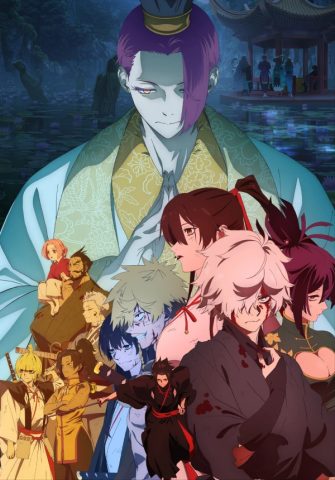
Jigokuraku 2nd Season
Second season of the adaptation of Yuji Kaku's manga: condemned ninja Gabimaru continues his search for the elixir of immortality on the Island of Shinsenkyo, facing ever deadlier enemies.
questa seconda stagione promette di approfondire ulteriormente i misteri dell'isola e il destino dei personaggi superstiti, mantenendo lo stile violento e visivamente curato che ha reso la serie una delle proposte più apprezzate del genere dark fantasy action degli ultimi anni. Con MAPPA reduce da un anno particolarmente carico di produzioni di alto profilo, l'attesa per questo ritorno è alta sia tra i lettori del manga, ormai concluso, sia tra chi ha scoperto la serie grazie al successo della prima stagione su Netflix e Crunchyroll.
see full review
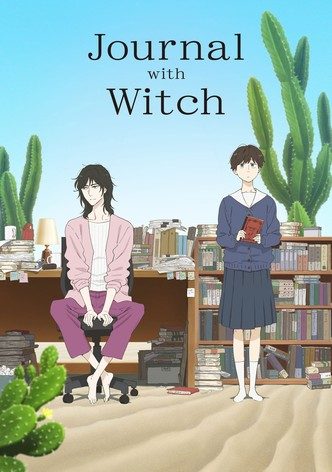
Journal with Witch
Psychological Drama - Miyuki Ôshiro - 01/04/2026 - A solitary writer and her teenage niece confront grief and forced cohabitation together, discovering each other in the process.
The anime Journal with Witch, directed by Miyuki Ôshiro, adapts Tomoko Yamashita's manga, bringing to the screen an introspective coming-of-age and trauma story. The plot follows solitary writer Makio Kōdai, voiced by Miyuki Sawashiro, who becomes the guardian of her fifteen-year-old niece Asa Takumi after a family tragedy. The series delicately explores themes like grief, social anxiety, and self-discovery through the daily interactions of the two protagonists, supported by a voice cast that also includes Fuko Mori. The debut is scheduled for January 4, 2026, promising a non-linear narrative focused on character psychology and their healing journey.
see full review
Yuusha Kei ni Shosu: Choubatsu Yuusha 9004-tai Keimu Kiroku
In a world where heroism is a punishment, condemned Xylo Forbartz fights hordes of monsters as part of Penal Hero Unit 9004, with no escape but an endless cycle of death and resurrection.
Sentenced to Be a Hero starts from a premise that decisively flips the classic codes of fantasy action: being a hero isn't a privilege but a sentence, reserved for the most dangerous criminals as an alternative to execution. Protagonist Xylo Forbartz, guilty of killing a goddess, is drafted into Penal Hero Unit 9004, a corps of condemned prisoners forced to face hordes of monstrous abominations in a perpetual cycle of death and resurrection with no real way out. Her encounter with a new, mysterious goddess, however, upends the balance of this punitive system, sparking a possible rebellion capable of breaking the chains of an imposed eternity of suffering. Produced by Studio KAI, the series leans into a dark, violent aesthetic consistent with its bleak premise, with an unusually long opening episode, nearly double the standard runtime, taking its time to introduce the world and its mechanics. The original concept and the story's rebellious streak drew attention from specialized critics from the earliest announcements, making the series one of the more intriguing action offerings on the winter 2026 schedule.
see full review
Ranma 1/2 Season 3
The third season of the anime adaptation of Rumiko Takahashi's manga follows the new adventures of Ranma Saotome, the boy who turns into a girl with cold water, and his chaotic group of friends and rivals.
The third season of Ranma 1/2, arriving in October 2026, confirms the return of Kōnosuke Uda as director and MAPPA studio for production. The official announcement, accompanied by a new trailer and key visual, also revealed the premiere date, October 3rd, on Nippon TV and streaming on Netflix. The cast expands with new names like Masako Nozawa, Jun Fukuyama, Mayumi Tanaka, Saori Hayami, and Minami Tanaka, who will join the original group of voice actors. The series continues to adapt the classic manga by Rumiko Takahashi, advancing the surreal adventures of young Ranma Saotome and his varied entourage in the Nerima district, maintaining intact the comedic spirit and mix of martial arts and paradoxical situations that made the original work famous.
see full review
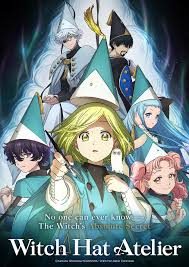
Witch Hat Atelier
Young Coco discovers that in this world magic is not an innate gift but a discipline built on glyphs drawn with near-calligraphic precision, and joins the atelier of the mysterious witch Qifrey to learn the craft, amid apprenticeship, secrets and responsibility.
Witch Hat Atelier, published in Italy by Planet Manga under the title Atelier of Witch Hat, finally arrives in animated form after years of anticipation fueled by the enormous popularity of Kamome Shirahama's manga. Produced by studio Bug Films and directed by Ayumu Watanabe, with series composition by Hiroshi Seko and music by Yuka Kitamura, the anime follows young Coco, raised by her dressmaker mother who believes magic is an innate gift reserved for the few, until she stumbles onto the truth: it is actually a discipline built on glyphs drawn with near-calligraphic precision. After accidentally petrifying her mother while trying to replicate a spell, Coco is taken in by the mysterious witch Qifrey, who brings her into her atelier alongside other apprentices, in a world where mages jealously guard the secret of their craft to prevent it from being misused. The heart of the series lies in this idea of magic as a craft to be learned through patience, discipline and responsibility, closer to a Renaissance workshop than to the innate magical power typical of shonen fantasy, and it is on this ground that the writing builds Coco's growth, torn between the thrill of discovery and the weight of the unwritten rules governing the world around her. Visually, the production, which reportedly took about three and a half years according to the studio, stands out for a particularly successful fusion of hand-drawn traditional animation and three-dimensional computer graphics, used above all to render the moments when characters trace glyphs with a level of detail and fluidity rarely seen in television productions of this kind. Critics have particularly praised the deliberate but never sluggish pacing, giving equal room to magical set pieces and to the more intimate moments tied to the protagonist's growth, in a fantasy series that favors craftsmanship over the genre's usual epic tone. Premiering on April 6, 2026 with a double-episode launch, the series met with an immediate, enthusiastic reception, quickly establishing itself as one of the standout releases of the spring season and confirming that manga readers' long wait had been more than justified.
see full review
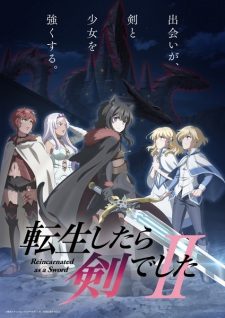
Reincarnated as a Sword II
The young catgirl warrior Fran and her sentient sword, Master, face new challenges among floating islands and the threat of the powerful Lich, continuing their journey of growth and adventure.
The second season of 'Reincarnated as a Sword' brings back the inseparable duo of the catgirl warrior Fran and the sentient sword Master, directed by Shinji Ishihira and produced by studio C2C. The narrative unfolds in two distinct arcs, the floating archipelago and the dangerous Seedrun region, where the protagonists will clash with a new formidable enemy, the Lich. The series continues in the vein of the first season, balancing moments of spectacular action with the usual touches of comedy and themes of personal growth and the bond between the two heroes. With a cast enriched by new voices and a soundtrack featuring FZMZ for the opening theme and Hanabie for the ending theme, the show reaffirms its winning formula in the isekai landscape.
see full review
The Apothecary Diaries (Season 3)
The third season brings Maomao back to court amid intrigue and mysteries: the first cour airs in October 2026 and the second in April 2027.
The third season of The Apothecary Diaries (Kusuriya no Hitorigoto) began on October 2, 2026 on NTV's Friday Anime Night block, streaming on Crunchyroll. The story is split into two parts: the first in October 2026 and the second in April 2027. Akinori Fudesaka directs at studio OLM, with an opening theme by Yorushika, and an original film is planned in Japan for December 2026 (December 11 according to one source). I did not find reviews of the aired episodes or the episode count.
see full review
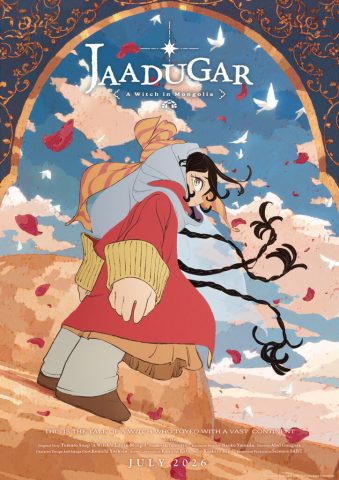
Jaadugar: A Witch in Mongolia
In thirteenth-century Persia, young Sitara is sold into slavery to a family of scholars who, instead of exploiting her, teach her to read. A coming-of-age story set against the great migrations of the Mongol era, weaving together slavery, knowledge and female emancipation.
Jaadugar: A Witch in Mongolia is the anime adaptation of Tomato Soup's manga A Witch's Life in Mongol, set in the Persian city of Tus in the early thirteenth century, where young Sitara is sold into slavery to a family of scholars who, rather than exploiting her, teach her to read and introduce her to knowledge. When the family's heir leaves to continue his studies in Nishapur, the Mongol invasion sweeps through the city: Sitara is captured by Tolui's army while her master dies protecting her, setting off a journey of personal growth against the backdrop of the era's great population movements. Produced by Science SARU, the studio behind titles like Devilman Crybaby and Scott Pilgrim Takes Off, the project is directed by Abel Gongora with Naoko Yamada, one of the most respected voices in contemporary Japanese animation, serving as chief director, alongside character designs by Kenichi Yoshida and a score composed by Koshiro Hino. From its earliest episodes, international critics have highlighted the originality of its historical setting, one rarely explored by Japanese animation with this level of geographic and cultural rigor, and the delicacy with which it handles a story weaving together themes of slavery, knowledge and female emancipation without slipping into easy rhetoric. Some reviews have noted that the first episodes lean more toward world-building and establishing relationships between characters than toward a fast-moving plot, an unhurried pacing choice that demands patience but suits the show's soft, painterly visual style, which carefully renders the light and landscapes of medieval Central Asia. Hino's score, paired with a deft use of silence, quietly underscores the story's more intimate moments. In a seasonal landscape dominated by major shonen franchises, Jaadugar stands out for choosing to tell an intimate, contained story, proving once again that Science SARU knows how to turn seemingly niche projects into genuine critical surprises, one several outlets have gone as far as naming a possible contender for Anime of the Year 2026.
see full review
Theatre of Darkness: Yamishibai 16
A new season of short horror stories inspired by Japanese folklore, presented by the mysterious narrator Kamishibaiya.
The sixteenth season of Theatre of Darkness Yamishibai confirms the long-running horror anthology formula, with a new series of short tales inspired by Japanese folklore and ghosts. Announced for the winter 2026 season and scheduled to air on TV Tokyo from January 11th, the series continues under the direction of Tomoya Takashima, maintaining its distinctive style and narration entrusted to the figure of the Kamishibaiya. The format, which has surpassed two hundred episodes, continues to leverage its self-contained episodic structure to explore different shades of terror, from urban legends to traditional spirits. Despite the absence of a specific rating in the notes, the series caters to its established audience, offering the suggestive and atmospheric horror typical of the production.
see full review
The Ramparts of the Sun
Koyuki, an insecure and lonely student, is slowly drawn into school life by three classmates who try to melt the ice around her.
The Ramparts of Ice, directed by Mankyū and produced by Studio Kai, is a dramatic anime series that delicately explores teenage insecurities. The protagonist Koyuki Hikawa, initially closed off in her own world due to oppressive memories, is gradually approached by three schoolmates determined to break her isolation. Originally aired on TBS in spring 2026 and distributed globally on Netflix, the anime unfolds over fourteen episodes that balance introspective moments with scenes of school interaction. The series, based on a manga of the same name, has garnered favorable audience reception thanks to its psychological characterization and measured storytelling, culminating in a second season released the same year.
see full review
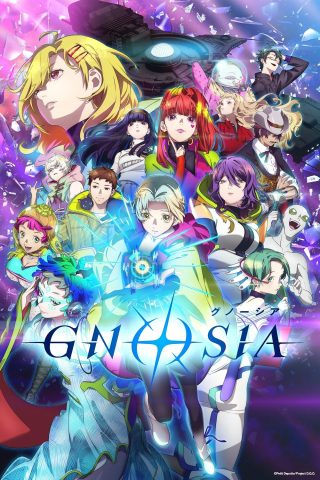
Gnosia
Anime adaptation of the social deduction game, available for streaming on Crunchyroll from August 15, 2026.
Airing between fall 2025 and March 2026, the anime *Gnosia* is the serial adaptation of the indie game of the same name, produced by Aniplex and Petit Depotto, directed by Kazuya Ichikawa, and written by Jukki Hanada. The 21-episode series, along with an additional epilogue trilogy, faces the challenge of translating the original video game's loop-based, deductive structure into a linear format, presenting itself as a standalone version seen through the eyes of the protagonist Yūri. The work successfully captures the unique atmosphere and deep themes of suspicion and identity while effectively developing the supporting cast, but it pays the price for this choice with a sometimes-compressed development of the central bond between Yūri and Setsu and a narrative pace that, especially in the second half, can feel rushed and unclear to viewers unfamiliar with the source material. The final result is an ambitious and conceptually interesting adaptation, albeit uneven in its exposition and emotional cohesion.
see full review