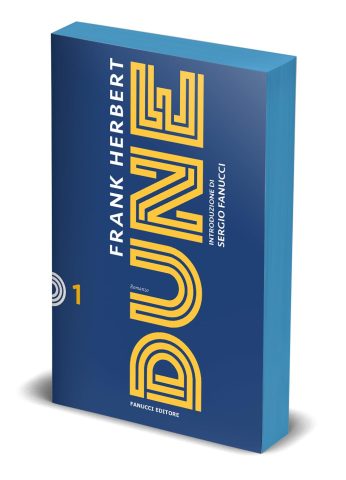
1DuneHerbertThe pioneer of political-ecological science fiction, set on a desert planet fought over for its most precious resource.Dune is arguably the most influential science fiction novel ever written, weaving together ecology, religion, politics, and economics into a single epic set on the planet Arrakis. The story of Paul Atreides, heir to a noble house who becomes the center of a religious and political revolution, has inspired virtually every "serious" science fiction work that came after, Star Wars included. The sheer complexity of its worldbuilding, complete with an entire ecosystem, languages, and coherent political systems, makes it a book that reveals new details on every reread.see full review 🛒 Buy on Amazon
10votesvote
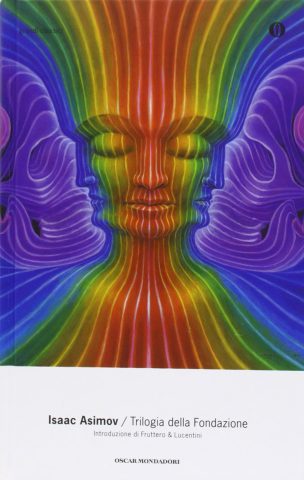
2Trilogia della FondazioneAsimovThe trilogy that invented "sociological" science fiction, featuring a falling galactic empire and a science capable of predicting the future.Isaac Asimov's Foundation Trilogy, originally published between 1951 and 1953, is a cornerstone of science fiction, honored as the "Best All-Time Series" at the 1966 Hugo Awards. The saga revolves around the brilliant mathematician Hari Seldon and his science of psychohistory, which predicts the collapse of the Galactic Empire and thirty thousand years of barbarism. To shorten this period to just a millennium, Seldon establishes the Foundation, an organization tasked with preserving knowledge and guiding humanity. Originating as short stories in the magazine "Astounding Stories," the work is distinguished by an episodic structure that emphasizes large-scale historical and political forces over individual character development, exploring themes such as the fate of civilizations, scientific progress, and free will. In the 1980s, Asimov expanded the original trilogy with two sequels and two prequels, creating a cycle of seven novels that also attempted to connect his other narrative universes.see full review 🛒 Buy on Amazon
9votesvote
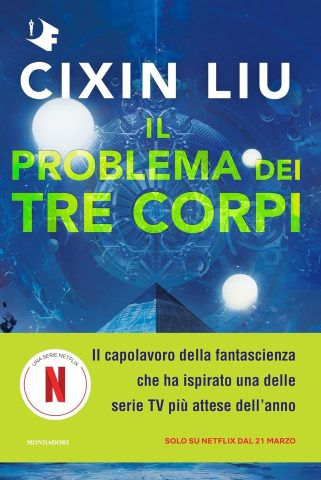
2Il Problema dei Tre CorpiLiu CixinChinese hard sci-fi turned global phenomenon, blending theoretical physics, history, and an unsettling first contact."The Three-Body Problem" by Liu Cixin, the first volume of the "Remembrance of Earth's Past" trilogy, is a landmark work of contemporary science fiction that won the Hugo Award in 2015. The plot intertwines two timelines: one begins in China during the Cultural Revolution, following scientist Ye Wenjie who, after personal trauma, sends a signal into space, and the other unfolds decades later, centered on nanotechnologist Wang Miao, who becomes involved in investigations into mysterious suicides and an unsettling video game called "Three-Body." The signal is intercepted by the Trisolaran civilization, a planet in a chaotic three-sun system, forcing humanity to confront the threat of invasion and profound scientific and philosophical questions. Liu Cixin, a Chinese engineer and writer, masterfully blends hard science, history, and epic storytelling, creating a complex novel that explores first contact with aliens, the responsibilities of science, and humanity's place in the cosmos, establishing it as a masterpiece of the genre.see full review 🛒 Buy on Amazon
9votesvote
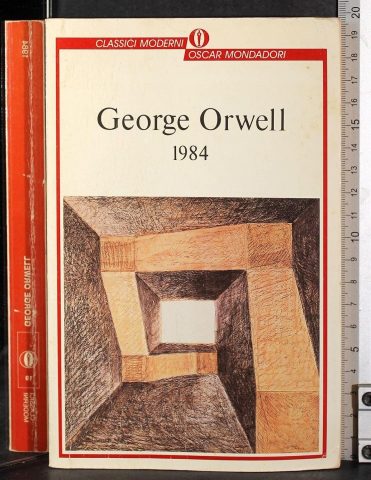
41984OrwellA totalitarian dystopia that lent its name to an entire collective imagination around mass surveillance.Published in 1949, George Orwell's "1984" is an undisputed cornerstone of dystopian literature. The novel paints a bleak future in which the world is divided into three totalitarian superstates, focusing on Oceania, a society controlled by the Party and its omnipresent leader, Big Brother. Through the story of Winston Smith, a clerk at the Ministry of Truth who attempts a desperate inner rebellion, Orwell explores timeless themes such as totalitarian control, the manipulation of language, and the destruction of truth and individuality. Its powerful critique of oppressive regimes and its unsettling foresight into the dynamics of power make this book essential reading that remains profoundly relevant, capable of evoking anguish and reflection in every generation of readers.see full review 🛒 Buy on Amazon
7votesvote
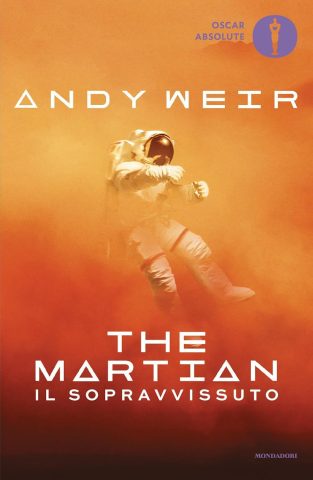
5Sopravvissuto - The MartianWeirSolo survival on Mars told with humor and scientific rigor, became a worldwide publishing sensation.Originally published as an ebook in 2011 by Andy Weir, "The Martian" is a hard science fiction novel that tells the story of astronaut Mark Watney's struggle for survival after being stranded on Mars, forced to rely on his scientific ingenuity. The narrative alternates between the protagonist's log entries and chapters dedicated to NASA's efforts, characterized by an ironic tone and a strong focus on technical-scientific details. While this lends credibility, it may feel dense for some readers. The book's success, which began through self-publishing and became a publishing phenomenon, led to a 2015 film adaptation directed by Ridley Scott, starring Matt Damon in the lead role. The film retained the optimistic and rational tone of the original work while simplifying some narrative aspects.see full review 🛒 Buy on Amazon
6votesvote
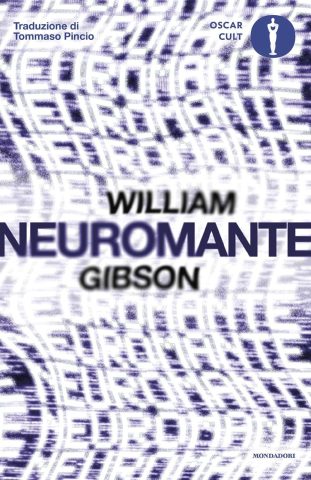
6NeuromanteGibsonThe novel that coined the term "cyberspace" and effectively founded the cyberpunk genre.Published in 1984, "Neuromancer" by writer William Gibson is the foundational novel of the cyberpunk genre, winner of the prestigious Hugo, Nebula, and Philip K. Dick awards. The plot follows the story of the "console cowboy" Case, a hacker stripped of his ability to access cyberspace and blackmailed into undertaking one final mission. With his visionary and dense prose, Gibson coined the term "cyberspace" and anticipated with astonishing foresight realities such as the internet, artificial intelligence, and the power of multinational corporations, granting the book the status of a literary classic that transcends the boundaries of science fiction.see full review 🛒 Buy on Amazon
5votesvote
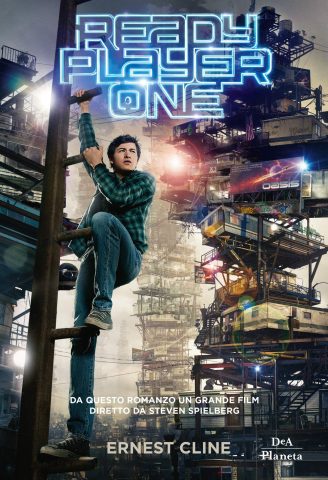
7Ready Player OneClineA virtual treasure hunt steeped in 80s nostalgia, became a symbol of contemporary geek pop culture."Ready Player One," Ernest Cline's debut novel published in 2011, is a cultural phenomenon that blends dystopia and nostalgia. Set in a bleak 2045, the story follows teenager Wade Watts in his quest for a hidden inheritance within the OASIS, an all-encompassing virtual universe created by the eccentric genius James Halliday. The book, a triumph of 1980s pop culture references, has established itself as a manifesto for the nerd community and inspired a successful film adaptation directed by Steven Spielberg in 2018. Despite some criticism regarding character development and an overreliance on lists of references, its breakneck pace and central theme about the value of reality versus the virtual have garnered widespread acclaim, making it a milestone of the genre.see full review 🛒 Buy on Amazon
4votesvote
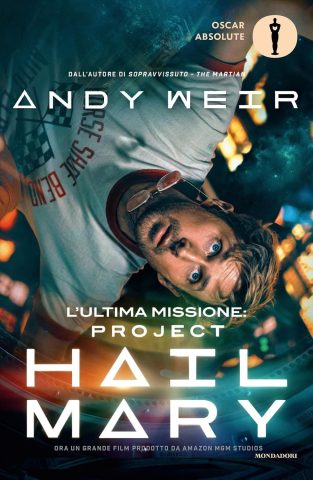
8Project Hail MaryWeirA desperate space mission to save humanity, combining rigorous science, suspense, and an unforgettable alien friendship.Project Hail Mary, Andy Weir's novel published in 2021, has established itself as one of the most mature and acclaimed works by the author of "The Martian." The story follows Professor Ryland Grace, who awakens on a spaceship with no memory, discovering he is the sole survivor of a desperate mission to save Earth from a solar catastrophe caused by microorganisms called astrophages. The novel, winner of awards such as the Dragon Award, stands out for Weir's typical scientific rigor, but above all for its ability to blend hard sci-fi with a touching interspecies friendship story, when Grace meets the alien Rocky. This bond, developed through collaboration and communication, transforms the narrative from a survival adventure into a powerful anthem to optimism and cooperation, becoming a true comfort book for many readers, especially in the post-pandemic context. The narrative structure, which alternates the present in space with flashbacks on Earth, and the author's humorous style contribute to making it an accessible and tender-hearted science fiction work, often described as a perfect fusion between "Interstellar" and "E.T."see full review 🛒 Buy on Amazon